Advice for Your Next Dating Moment

Disclosure
Choose a calm moment, find words that fit and leave space for a thoughtful response.
When Should You Disclose an STI?
Consider timing, mutual understanding and the difference between early dating and intimacy.

Dating After a Herpes Diagnosis: Your Next Chapter
Rebuild confidence and return to dating without making a diagnosis your whole story.

How to Start Dating Again After an STI Diagnosis
Decide what you feel ready for and take a practical first step toward connection.

First Dates
Plan transport, a public meeting place and a comfortable way to leave.

Dating Confidence
Turn interests and intentions into a warm profile someone can easily answer.
Understanding Privacy on STI Dating Sites
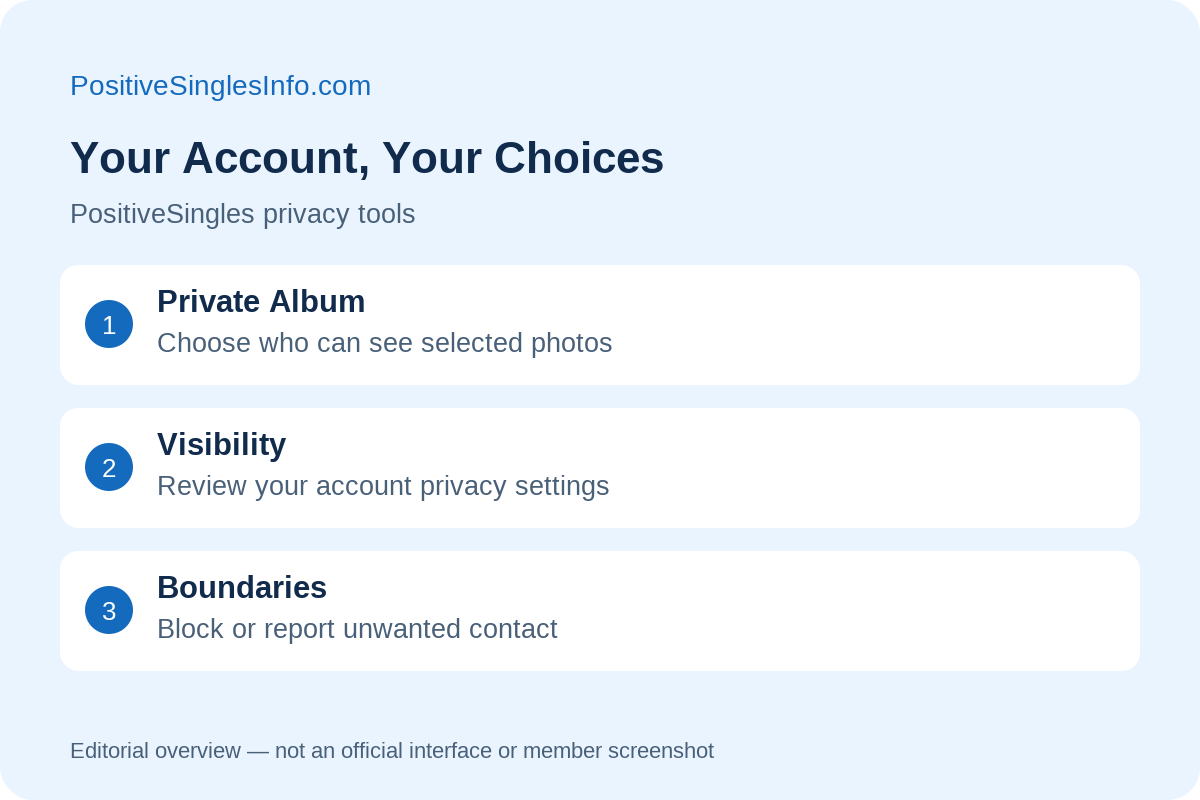
Understand profile visibility, photo access and the privacy choices available to you.

Long-Distance Dating and Sexual Health Conversations
Balance emotional connection, time zones and honest plans for seeing each other.
Questions to Ask Before Joining PositiveSingles
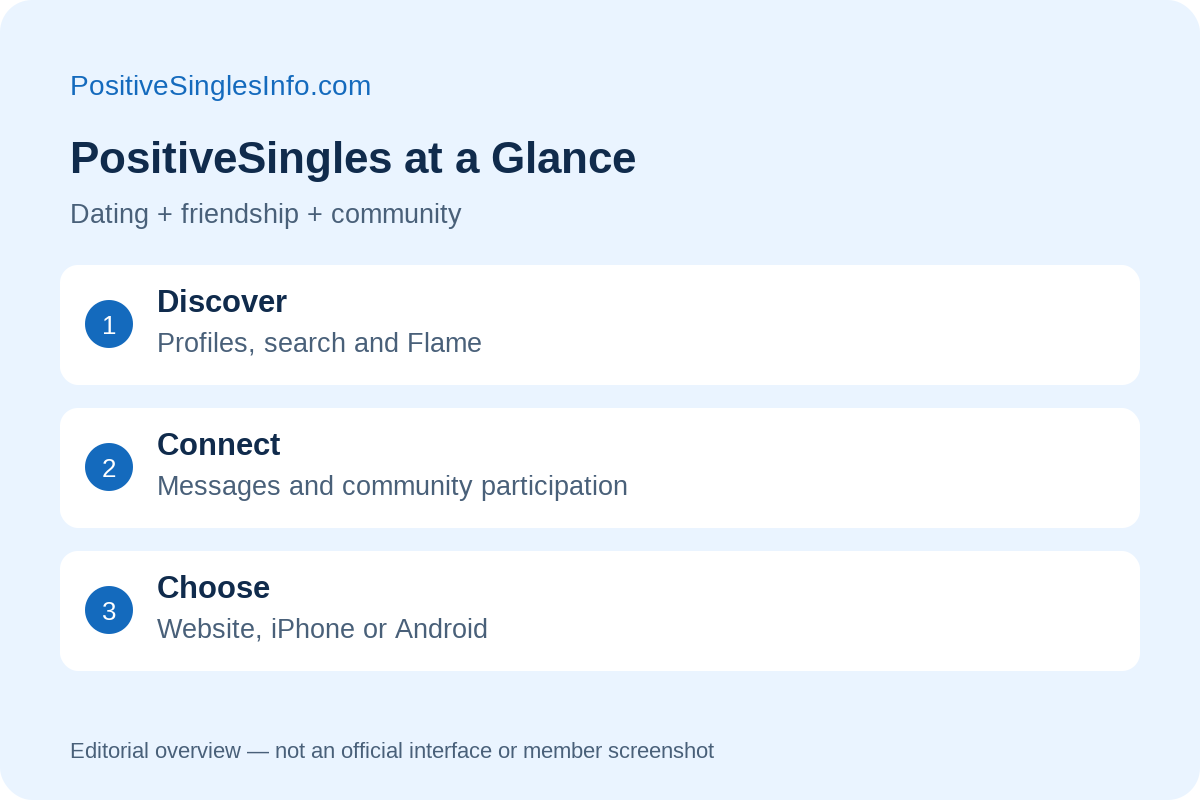
Compare audience fit, account access and the tools you would actually use.
HSV-1 vs HSV-2 Dating
A clearer conversation starts by distinguishing virus type from infection site.
Practical Questions Deserve Different Answers
Returning to dating, telling a potential partner about an STI and deciding whether to meet are different tasks. They should not all become the same checklist with a different title. This collection separates communication, readiness, profile writing, personal privacy and meeting logistics so you can find the kind of help you need today. The articles are relationship guidance, not medical treatment plans.
If you are still processing a diagnosis, begin with rebuilding your rhythm after herpes or dating after an STD diagnosis. They are not instructions to start immediately. The return-to-dating routine is for the later stage when small practical steps feel useful.
Disclosure and Informed Conversation
How to tell someone you have herpes includes example openings and ways to handle questions without delivering a memorized speech. When to disclose an STI addresses timing, privacy and the need to talk before sexual contact rather than prescribing one universal date number.
A clear conversation gives both people room to think. It is not an attempt to guarantee acceptance or persuade someone who has said no. You can prepare an opening sentence, decide what you know and identify questions for a clinician. You cannot script another person’s reaction. These articles distinguish respectful uncertainty from pressure, insults or demands for private documents.
Present Yourself and Protect Your Boundaries
The profile-confidence article provides examples of specific, human introductions. It differs from the product profile guide, which explains account presentation and photo choices. One helps with what to write; the other helps with where and how the service displays it.
Privacy on STI dating sites considers your whole digital footprint: notification previews, reused photos, contact details and movement to another messaging channel. It complements PositiveSingles controls rather than pretending that a single app switch can solve every privacy concern. Your privacy choices should still allow an honest description of your relationship intentions.
From Conversation to a Real Meeting
Use the first-date checklist when a meeting is becoming concrete. It covers choosing a setting, keeping independent transport and changing a plan when the circumstances change. A considerate match will not object to a sensible public first meeting.
For distance, long-distance conversations focuses on maintaining ordinary contact and planning visits without turning anticipation into a promise of relocation. If your question is whether the service is worth trying, questions before joining turns product research into a manageable evaluation. The blog directory groups these articles with the product comparisons, so you can move between practical guidance and the service details behind it. Read selectively; useful advice should make dating clearer, not create an endless preparation project.